
The Science
Modern communication is trapped in a race to the bottom for human focus. Driven by the attention economy, tech platforms deploy aggressive, high-frequency design tactics to capture and monetize our limited cognitive capacity.
Backed by cognitive and environmental science, fighting digital noise does not require shouting louder – it requires designing for stillness. By combining the hyper-efficiency of micro-messaging with quiet, static displays, we can respect human boundaries while delivering high-impact information. Utilizing spaced mere-exposure within high-dwell environments unlocks the power of place, delivering content exactly where the human brain is most primed to absorb it.

Attention Economy
Scarcity in a World of Abundance
At its core, the attention economy theory views human focus as a finite, precious resource. Just as what Nobel laureate Herbert A. Simon predicted – we live in an age of information abundance but attention scarcity.

Today, tech platforms and advertisers treat our time as a commodity, using loud notifications, infinite scrolling, and aggressive algorithms to constantly capture, extract, and monetize our cognitive focus
We can fight back against this attention imbalance by intentionally designing for stillness and simpleness. Instead of shouting for attention with moving feeds and flashing alerts, we can embrace smaller displays that show static images for longer periods.
When combined with micro-messaging, these devices transform from demanding slot machines into calm, ambient pieces of infrastructure that wait for us, rather than fighting for us.

Micro-Messaging
The Power of the Whisper
Micro-messaging is the design practice of compressing information down to its absolute essence. Instead of delivering walls of text, it transmits high-context data using the smallest possible footprint.
In information theory, communication efficiency relies on a high “signal-to-noise ratio” – maximizing useful data while eliminating background chaos. When a display is stripped of animation and bright backlights, the “noise” drops to zero. To match this quiet hardware, the software must change too. Instead of shrinking a complex layout, micro-messaging filters out the fluff entirely, leaving only the pure, high-value signal.
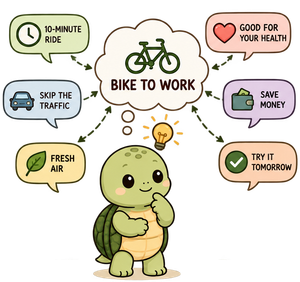
Consider how traditional informational posters or large public displays operate. They are often crowded with paragraphs of text, fine print, and multiple subheadings that require the reader to actively read to extract any value. This creates cognitive friction. Micro-messaging removes this friction by replacing dense layouts with an instantly glanceable reality, using simple visual anchors and minimal text to deliver immediate meaning.



Spaced Mere-Exposure
The Power of Dynamic Familiarity
Spaced mere-exposure effect is a psychological phenomenon demonstrating that repeated, timed encounters with a clean stimulus steadily increase a person’s comfort and preference for it. First formalized by psychologist Robert Zajonc in 1968, the mere-exposure effect proves that familiarity breeds trust and effortless absorption. However, modern cognitive research shows that exposure must be spaced and dynamic to remain effective.
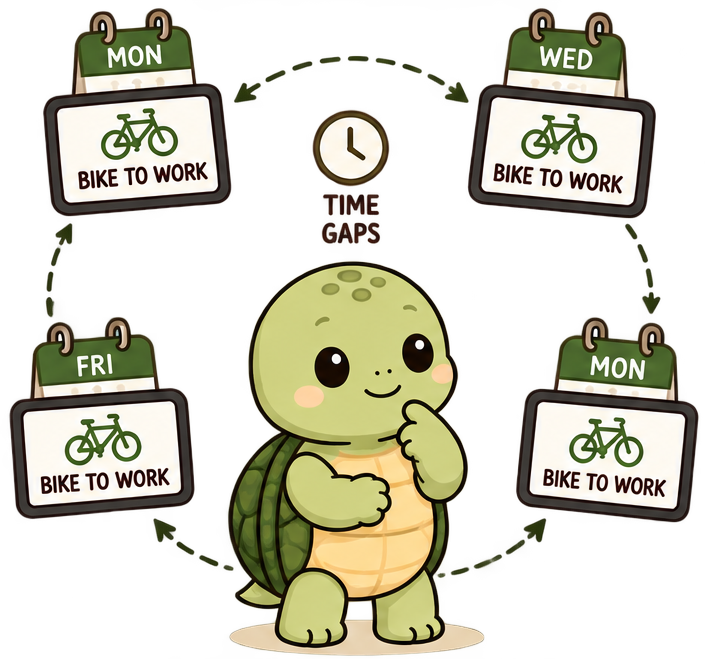
If you leave a traditional printed poster on a wall for weeks, the human brain suffers from habituation. It completely tunes out the static image as background noise. By using introducing spaced, subtle updates to a message over time, you reset the brain’s filtering mechanisms, ensuring high cognitive fluency without demanding active attention.
Consider how information fades when locked into traditional print. A physical poster urging employees to recycle more or support a corporate charity might be noticed on day one, but by day five, it becomes invisible wall decor that fails to change behaviour.
Spaced mere exposure on quiet displays solves this flaw by turning the campaign into a slow-moving, episodic story. By keeping the interface completely static for hours but subtly advancing a narrative thread at designated intervals; such as showing a single, glanceable image of a community school on Monday, introducing a micro-message about its students on Wednesday, and revealing the impact of the charity on Friday, the display catches the eye just enough to be processed passively. The user never feels bombarded by a flashing animation, yet they remain connected to an unfolding story they cannot simply tune out.

The Power of Place
Where a story lives matters.
While spaced mere-exposure dictates the cognitive pacing of a message over time, the final variable is physical geography. The Power of Place is an environmental communication framework that maps these dynamic micro-messages directly onto spaces optimized for high dwell time (how long a person remains stationary) and contextual congruency (the relevance of the space to the message). Advertising and spatial psychology studies demonstrate that memory retention is not driven by visual noise, but by structural placement; positioning quiet displays in areas where humans naturally pause can increase message recall by up to 40% without resorting to flashing graphics or sound.

A practical example of this strategy relies on repeatability – targeting high-dwell environments where the exact same people return every single day, such as an office washroom, a cafeteria line, or a coffee station. In these physical spaces, individuals routinely experience “empty time.” They are temporarily stationary, their smartphones are often pocketed, and they are naturally looking for a low-strain visual anchor to pass the time.
A small, static display placed directly in these recurring daily zones showing the next brief chapter of an ongoing charity story achieves maximum utility. Because the physical location captures the same audience during a predictable, recurring window of mental downtime, a sub-second daily glance stacks over time. The audience naturally absorbs the unfolding narrative day by day, translating passive daily routines into deep, long-term campaign recall.

Planet Friendly
Responsible Technology
Technology should support the story – not compete with it.
If we are creating space for stories that have a positive impact, the infrastructure delivering those stories should reflect the same values. That’s why we use e-Paper Technology.

Human-friendly
The paper-like appearance is easy on the eyes. Unlike backlit digital screens, e-paper doesn’t rely on bright illumination or emit blue light from a backlight, instead rely on ambient light to create a calmer and more comfortable viewing experience.
Non-intrusive
The quasi-static nature of e-paper allows messages to remain present without constant movement, animation, or visual distraction.
Low Energy
It only uses energy when content changes, allowing stories to remain visible with very little ongoing power.
The result is a different kind of digital display.
Quiet. Energy-efficient. Easy to read. Designed to belong in everyday spaces.
A screen that never screams.
Our displays are designed to feel like part of the environment, rather than another source of digital noise.
A story can simply be there – waiting to be noticed and encountered again and again.
This creates opportunities for message reinforcement without demanding attention or interrupting the moment.
That’s what makes e-paper particularly suited to the communication what we create: meaningful messages that invite people to pause, connect, think, and act – rather than compete for attention.